

Surfactants play a crucial role in the formulation of various products, from personal care items to household cleaners. Among them, Cocamide Dea Surfactant has gained significant attention due to its unique properties and wide - ranging applications. As a supplier of Cocamide Dea Surfactant, I have witnessed firsthand how this ingredient can influence the spreadability of products. In this blog, I will delve into the science behind it and explore its impact on product performance.
Understanding Surfactants and Spreadability
Before we discuss the specific influence of Cocamide Dea Surfactant on spreadability, it is essential to understand what surfactants are and how they relate to the concept of spreadability. Surfactants, short for surface - active agents, are compounds that lower the surface tension between two liquids or between a liquid and a solid. This property allows them to mix substances that would otherwise be immiscible, such as oil and water.
Spreadability refers to how easily a product can be spread over a surface. In the context of personal care products like lotions, creams, and shampoos, good spreadability is highly desirable as it enhances the user experience. A product that spreads easily covers a larger area with less effort, ensuring even application and better distribution of active ingredients.
How Cocamide Dea Surfactant Affects Spreadability
Reducing Surface Tension
One of the primary ways Cocamide Dea Surfactant influences spreadability is by reducing the surface tension of the product. When a product has high surface tension, it tends to form droplets and resist spreading. Cocamide Dea Surfactant molecules align at the interface between the product and the surface, creating a more fluid - like behavior. This reduction in surface tension allows the product to flow more freely and spread more evenly over the skin or hair.
For example, in a shampoo formulation, Cocamide Dea Surfactant helps the product to spread through the hair easily. It breaks down the surface tension of the water - based shampoo, enabling it to coat each hair strand effectively. This not only makes the shampoo easier to apply but also improves its cleansing ability by ensuring that all parts of the hair are exposed to the active ingredients.
Emulsification and Stability
Cocamide Dea Surfactant also acts as an emulsifier in many products. Emulsions are mixtures of two immiscible liquids, such as oil and water. Without an emulsifier, these liquids would separate over time. Cocamide Dea Surfactant forms a stable emulsion by surrounding the oil droplets with a protective layer, preventing them from coalescing.
In a lotion or cream, a well - emulsified product has better spreadability. The evenly dispersed oil droplets in the water - based phase contribute to a smooth and creamy texture. When the product is applied, the emulsion remains stable, allowing it to spread smoothly over the skin. This is important because an unstable emulsion can result in a lumpy or greasy product that is difficult to spread and may not provide an optimal user experience.
Viscosity Modification
Another factor that affects spreadability is the viscosity of the product. Cocamide Dea Surfactant can influence the viscosity of a formulation. In some cases, it can thicken the product slightly, which can be beneficial for spreadability. A product with the right viscosity is easier to control during application. It is not too runny, which would cause it to drip, nor too thick, which would make it difficult to spread.
For instance, in a body wash, a moderately viscous product containing Cocamide Dea Surfactant spreads well on the skin. It adheres to the body surface long enough to be massaged in, yet it is still easy to rinse off. The surfactant helps to achieve this ideal viscosity, enhancing the overall spreadability and usability of the product.
Comparison with Other Surfactants
Compared to Sles
Sles, or Sodium Laureth Sulfate, is another commonly used surfactant. While Sles is known for its strong cleansing properties, it may not always provide the same level of spreadability as Cocamide Dea Surfactant. Sles can sometimes make a product feel a bit "slippery" and may not have the same emulsifying and viscosity - modifying effects as Cocamide Dea Surfactant.
In a shampoo formulation, a combination of Sles and Cocamide Dea Surfactant can be used. The Sles provides the initial cleansing power, while the Cocamide Dea Surfactant improves the spreadability and the overall texture of the product. This combination results in a shampoo that is both effective at cleaning the hair and easy to apply.
Interaction with Isopropyl Myristate in Cosmetics
Isopropyl Myristate in Cosmetics is a common emollient used in many cosmetic products. When combined with Cocamide Dea Surfactant, it can further enhance the spreadability of the product. Isopropyl Myristate has a light, non - greasy texture that helps to make the product feel smoother on the skin.
The Cocamide Dea Surfactant ensures that the Isopropyl Myristate is well - dispersed in the formulation, creating a stable and easily spreadable product. In a facial moisturizer, for example, the combination of Cocamide Dea Surfactant and Isopropyl Myristate in Cosmetics results in a product that spreads evenly over the face, leaving a soft and smooth finish.
Applications in Different Industries
Personal Care Products
In the personal care industry, Cocamide Dea Surfactant is widely used in products such as shampoos, conditioners, body washes, and facial cleansers. Its ability to improve spreadability is highly valued as it enhances the user experience. Consumers prefer products that are easy to apply and distribute evenly, and Cocamide Dea Surfactant helps manufacturers meet these expectations.
Household Cleaning Products
Cocamide Dea Surfactant is also used in household cleaning products, such as dishwashing liquids and all - purpose cleaners. In these products, good spreadability is essential for effective cleaning. A dishwashing liquid that spreads easily over the dishes can cover a larger surface area, ensuring better removal of grease and dirt. The surfactant helps the product to cling to the surfaces, improving its cleaning performance.
Conclusion and Call to Action
In conclusion, Cocamide Dea Surfactant has a significant influence on the spreadability of products. Through its ability to reduce surface tension, act as an emulsifier, and modify viscosity, it enhances the performance and usability of a wide range of products in different industries.

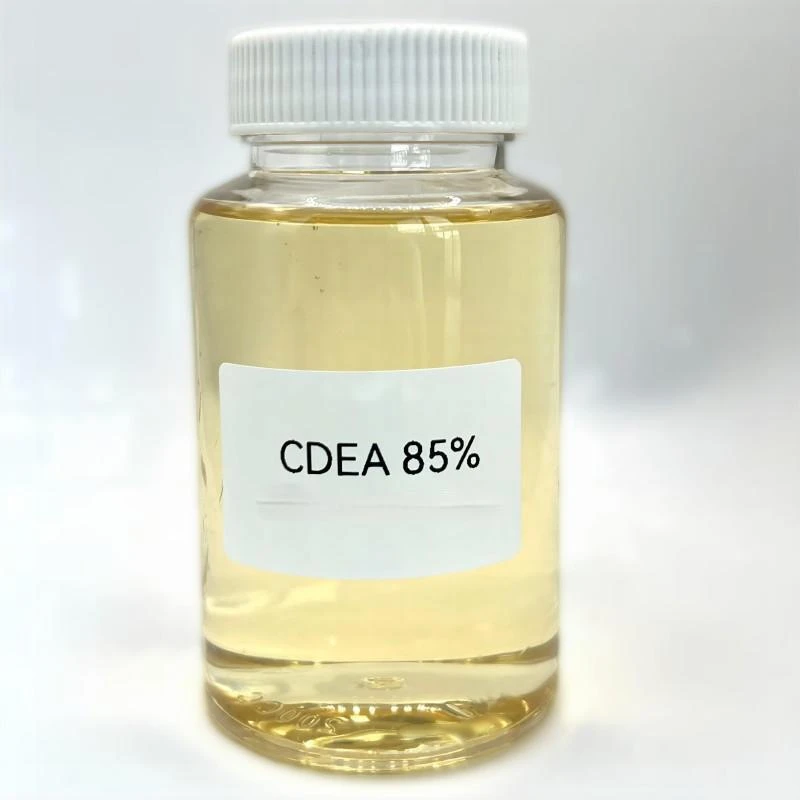
As a supplier of Cocamide Dea Surfactant, I am committed to providing high - quality products that meet the specific needs of my customers. Whether you are a personal care product manufacturer looking to improve the spreadability of your shampoo or a household cleaning product producer aiming for better performance in your dishwashing liquid, I can offer the right solution.
If you are interested in learning more about how Cocamide Dea Surfactant can benefit your products or would like to discuss potential partnerships, please feel free to reach out. I am always ready to engage in a productive conversation about your requirements and how my products can help you achieve your goals.
References
- Rosen, M. J., & Kunjappu, J. T. (2012). Surfactants and Interfacial Phenomena. John Wiley & Sons.
- McCutcheon's Emulsifiers & Detergents. (Annual). Allured Publishing Corporation.
- Lide, D. R. (Ed.). (2008). CRC Handbook of Chemistry and Physics. CRC Press.